Sunday, March 6, 2016

Shrub Club


Plum tree and willows at Jackson Bottom Wetlands
If you've been out and about in the past week or so, you've noticed a plethora of flowering shrubs and trees all over the area. The ornamental plums, cherries, camellias, and quince are exploding with their bright colors. An army of bees were making the rounds on our trees, having been diverted from the crocus and daffodils. It's a fitting farewell to winter, although our winter here in the western Oregon lowlands was very mild. In fact, we have not had a freeze since January 8th.

"So what about our native plants," you ask? None of the plants mentioned above are native, but there are a few natives starting to show their blooms. While walking around a couple of our nature parks in the last week we spotted Indian Plum, Red Currant, Willows, and Tall Oregon Grape. These shrubs are typically among the first to bloom in spring and they seem eager to please this year. And they also signal the start of the season for us wildflower watchers - always an uplifting moment! Here's a quick look at those "early birds."

Indian Plum - Oemleria cerasiformis


This plum is native! Also known as osoberry, the ripe fruits were eaten by native peoples from time to time. Before ripening they were also used as an astringent. The plant stalks could be used on skin sores after being mashed.


Red-Flowering Currant - Ribes sanguineum


In spite of the common name, the colors on this native range from white to pink to red. It also has berries, but they are inedible. The blooms are popular with hummingbirds as well as bees. The Scottish explorer-naturalist, David Douglas, sent this plant back to Europe where it was used extensively as an ornamental. These two photos show the range of color for the blooms.


Willow Shrubs - Salix sp.


Willow shrubs are excellent plants to use when restoring wetlands or riparian areas. They are very hardy and they do well in wet soil. In addition, they do well when competing with non-native species. In the photo below you can see all the willow "blooms" at Jackson Bottom Wetlands on 3/04/2016.


Taking a closer look at the "blooms" reveals a catkin rather than a true flower. The photo shows the male pollen-bearing anthers extended. This allows insects to drag pollen from the anthers to the female catkin, which typically forms a bit later. Interestingly, willows do not rely on wind to transport the pollen - just insects. Which explains why they do well in bug-infested wetlands!


Tall Oregon Grape - Mahonia aquifolium


Way back in 1899, this northwest native was designated as the official Oregon State plant. We've seen this popular plant in natural areas as well as business parks and suburban yards. It's hardy, has a striking bloom, is evergreen, and produces colorful blue berries - suitable for making jam or your own ink if you are so inclined. It typically blooms later in the month, but these we saw at Jackson Bottom were already starting to open.


Friday, February 19, 2016

The Annual Moss Issue - 2016

Back by popular demand, it's the annual Moss issue! Don't worry, this post is not about Kate Moss, the U.K. fashion model who's been on more magazine covers than the leaders of the free world - it's about that short green stuff that grows all over western Oregon in the winter shade - a.k.a., Bryophyta.

Moss in the Headlines: Most folks don't get too excited about our moss, but one important role of moss came to light recently in our area. The Oregon DEQ and U.S. Forest service were checking local moss for presence of metals as part of a larger study. High levels of cadmium and arsenic were found in the moss and the air near a small glass factory in S.E. Portland. This has led to a much larger investigation and increased concern for residents in the affected area. Regulatory agencies are taking a second look at existing metal rules in light of these indicators. See link below for more information. Hats off to that moss!

Meanwhile, it looks like another banner year for moss here in the Pacific Northwest. Thanks to the lingering El Niño weather pattern, we've got more rain and warmer days than typical - the ideal growing conditions for the tiny green rain forest plants. These Bryophyta members thrive in our local forested parks, with a bit of sunlight and an abundance of dampness. I won't repeat the fascinating details of their role in the big nature picture; but you can visit our prior Moss Editions for more info (see links below).

For me, the moss season presents all the elements of a good photo challenge: rich color (mostly green of course), abstract patterns, and the beauty of nature all rolled into one. Not to mention that blooming wildflowers are scarce-to-none this month.

We had the driest summer and fall on record last year, but that did not seem to affect this year's moss growth. Each of the locations I visited to get these photos seemed awash in good, healthy moss. Here's a few more photos, but as before, use the link below for the complete collection!


Links:


Portland Moss Metals Detection News

Full 2016 Moss Gallery

Last Year's Moss Issue


Thursday, February 11, 2016

For the Team

A recent bout with some kind of flu bug in our home left me grounded for a couple of weeks. I was bleary-eyed and needing at least one good nap a day. Hopefully, the nasty virus died off here at home and the unwilling host (me) will somehow benefit from the ordeal. Once the worst was over, I caught up on some reading and TV, including the obligatory Groundhog Day movie on that day. In my half-baked condition this movie was more enjoyable than usual. Meanwhile, at our local zoo, Velda the African pygmy hedgehog predicted an early spring. A few days later, after all that excitement, I ventured outside for a short walk.

My first impression was cautionary - "what happened to winter?!"  The day was fairly warm, the yellow crocus in our yard were blooming, and the daffodils are about eight inches up and the buds are swelling. Velda was right - at least for now - it seems more spring-like than winter.

Next day I managed to get to a local park and walk a mere half mile loop while my support staff ran errands. It turns out my slow pace on this little outing was beneficial, as I spotted some odd fungus and a tiny newt along the way (photos below).

Newts are semi-aquatic amphibians that are part of the salamander family. The Rough-skinned newt I found on this day is common in western Oregon and usually lives near water and rotting wood. They are colorful, yet can blend in well with the ground cover. These newts have an interesting adaptation with their main predators: garter snakes. The newt has a toxic secretion on its skin that keeps other predators away. But the garter snake has developed a tolerance to the toxin and will eat the newts anyway. Fear not, the tiny newt has the last laugh. Once eaten the newt's toxin gives the snake a specific chemical signature, which in turn can be detected by other newts, allowing them to flee. Of course the newt that was consumed has to take one for the team!

We'll see if the early spring will last - in the mean time watch your step on the riparian trails - the newts are out and about!


This Rough-skinned Newt is the only "non-slimy" salamander
in western Oregon. This one is only about four inches long but
can grow to eight. The skin secretes a toxin for protection.

Nearby, several clumps of Palomino Cup (Peziza repanda)
fungus are poking up out of the decaying wood and leaves.
To me, they resemble wontons, but they are inedible.

Crocus blooming on January 28.

Wednesday, February 3, 2016

The Frozen Edition

This would be a great time to insert a video of our skeleton crew belting out a robust version of Let it Go. Lucky for you loyal readers, the crew has been under the weather and that singing voice  now resembles an elderly camel's snore, after a long walk across the desert. So keep your earplugs in the drawer - we promise never to auto-run karaoke videos on this blog!

Both evergreen and non-evergreen plants have the remarkable ability to withstand winter's lower temperatures. I won't go into the details here, but suffice to say in late fall plants begin to alter their solutes (mostly sucrose) and proteins to prevent the liquids within their cells from freezing. They can also alter their cell membrane lipids to better tolerate the cold. As we know from observation, in some winters damaged plants or extreme cold can bring on crystallization, thus killing the plant. But overall, the "antifreeze" strategy has evolved to be successful.

Meanwhile, we did manage to get out and about during that first week of January when our region got a shot of frozen precipitation to bring in the new year. We don't get it every year and it's rarely more than a few inches, for which I am truly thankful. But for us blogger-photographers, it's a nice twist at the least or a man vs. nature challenge at the most.

It is an El Niño year here again, so we expected above average precipitation, and that we got in December and January, but it was all liquid. But in early January conditions were right for some frozen stuff: we got an inch or two of snow late on Jan. 2nd. The next day was mostly below freezing and then on the early morning of Jan. 4th we got a dandy mix of snow, sleet, and freezing rain as warmer air arrived from the west. We did not venture far on this day as the roads were quite slick. But the late morning brought some clearing while the ice was still around, making for some good photo ops.

A few days later on January 8 temps were well above freezing here, but still very cold out in the Columbia Gorge, which makes a nice recipe for frozen waterfalls. So the skeleton crew packed up our cameras and survival gear and rolled out. Thankfully we didn't need the survival gear since the Espresso cart was open at Multnomah Falls, but we did load up a memory card with icy images.

The "Frozen" slideshow below should load up in less than 30 seconds. Let us know if you have any trouble viewing it.

...

Tuesday, January 19, 2016

A Gorge in the Gorge


Now that our first real cold snap of the season has come and gone, it's time to ruminate about hot summer days! One of my favorite hiking and photography places within an hour's drive from home is the Columbia River Gorge Scenic Area. Although I seldom visit the Gorge in cold weather, it has a unique beauty all year. If you've lived here for any length of time, chances are good that you have hiked a few of the waterfall trails and/or taken visitors on a tour of the old scenic highway. And with 80 miles of river and hundreds of trail miles to explore, you won't run out of destinations.

From a botanical point of view there are several unique and interesting places to land for a fun and rewarding day trip. In summer, my favorite mini-destination is the venerable Oneonta Gorge. It's basically a half mile long slot canyon that runs due south from the Columbia River on the Oregon side. It's narrow, deep, and a cool water creek runs through it. In addition, it can be a beautiful photography site - if you manage to get there when no other humans are around. And like many places in the Columbia Gorge itself, it is being loved to death, so to speak.

But I'll be the first to admit, trekking into the Oneonta Gorge on a sweltering August day is nothing short of bliss. The combination of the narrow 300 foot high basalt walls and cool ankle deep water of Oneonta Creek drops the 90 plus highway temperature at least 15 degrees. The real challenge and fun is to reach the end of this mini-gorge where you can swim in a deep pool below a 100 foot waterfall. But to reach it, you have to scale a huge log jam, walk a 1/2 mile in the creek, and wade through a deep spot that can reach your neck. On a hot summer day, this becomes almost like a pilgrimage along with your fellow travelers; the mood is upbeat and festive. People bring their dogs, kids, and food.

In spite of the hoopla, Oneonta Gorge remains a botanical marvel. Outside of July and August, few people venture into this unique spot. Oneonta Creek runs crystal clear and supports a variety of small fish, frogs, salamanders, and snakes. The basalt walls along the entire half mile are literally covered with moss and are teeming with ferns, woodland plants, and lichens.

For waterfall lovers, the Oneonta Creek trail takes you to three of the four waterfalls along the creek. The Lower Falls shown here is the fourth one and is visible only by walking through the Oneonta Gorge. We have made the loop trail in the summer many times, topping it off with the cool walk into this slot canyon. These trails are well documented by most Gorge hiking websites and guidebooks.

As the human visitors parade by, this Pacific Giant
Salamander (Dicamptodon tenebrosus) watches
 calmly from his little cave.
The photography aspect of this site is also fascinating. Although the slot canyon was surely known to our native Americans of the area, the first white man to photograph it was Carleton Watkins around 1865 while visiting from California. He was born in Oneonta, N.Y., so he named the spot after his hometown. Watkins was an accomplished photographer who spent many years capturing images of Yosemite National Park with his large view camera and a "stereoscopic" camera. He became well known and had his own gallery in San Francisco.


To close out this post, here's a look at the current conditions in this spot. We visited several places along the old scenic highway on January 8th. Earlier in the week, snow and below freezing weather made its way in. We look forward to spring!


Sunday, January 3, 2016

Skeleton Crew

Just think, if the ancient Romans still ruled the world, we would not be celebrating New Year's Day until March 1st. That seems a bit more logical as it is close to our Spring equinox. But leave it to a politician to fix it: around 150 B.C. two more months were added to the calendar; and then in 46 B.C. our pal, Julius Caesar implemented the so called Julian calendar, which was more useful because it was based on solar movement. Prior to that, the Roman calendars were following the moon and became inaccurate over the centuries. January 1st became the start of the new year at that point because new Roman consuls were elected on that day.

In the middle ages, religion stepped in to reset things; January 1st fell out of favor with Christians in Europe because it was thought to be too pagan-like. Dates like Easter or Christmas were used instead. Finally, in 1582, the Gregorian calendar restored January 1st as the start of the year. But of course there was one large outlier: the U.K. and colonies still used March as the start of the year and did not adopt the new improved calendar until 1752.

# # #

Returning to the present, it's that time of year again here at wildflower blog central. The volunteer staff has the next couple of months off, but not to worry, yours truly will be here to monitor our busy inbox and to keep those lenses polished and camera batteries charged up. Meanwhile, between sips of black coffee and green tea, planning is underway for next season. And since Santa did not bring us a drone, we will be earthbound for another year.

But seriously, we do have a backlog of posts to release throughout this time period, so be sure to stay tuned and keep your subscriptions current. The skeleton crew will be busy researching new places to visit and explore as the long winter nights nip at our toes. If you have any ideas, be sure to drop us a line* as they used to say in the olden days.

Meanwhile, to round out this post, here are some photos from the past year that did not make it into a post. So many photos and so little time.**

January 2015

Left: Thimbleberry branches in sunset light at Bald Peak State Park.
Right: Shelf Fungus at Cooper Mountain Nature Park.


February 2015

Left: Turkey Tail fungus at Rood Bridge Park.
Right: Winter Aconite at Cherry Street trail.


March 2015

Left: Trout Lily at Jenkins Estate.
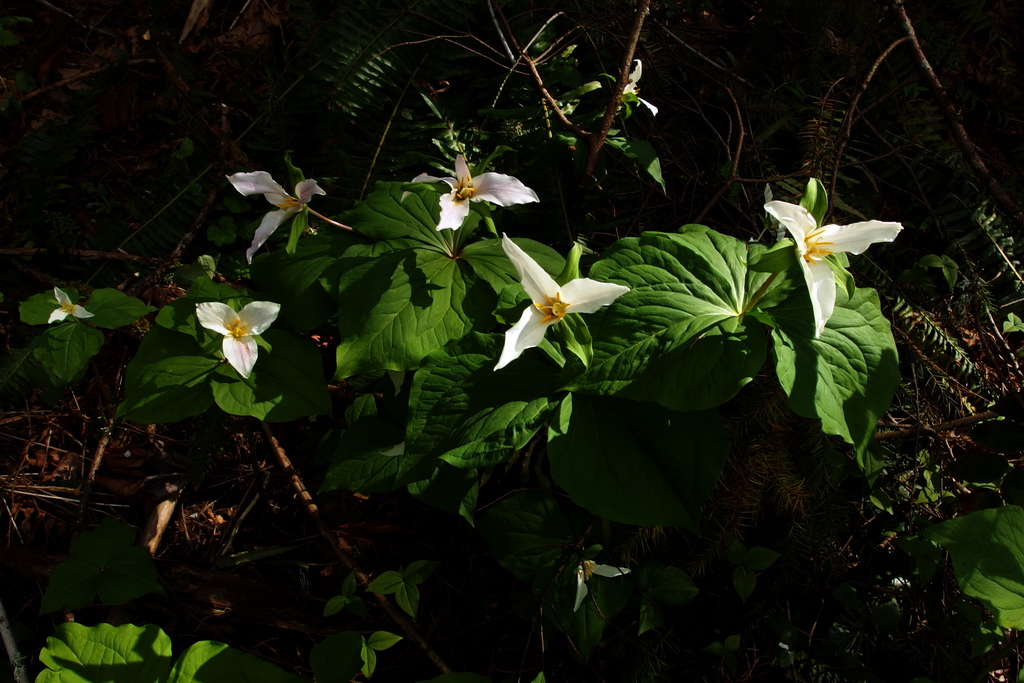
Right: Western Trillium colony at Jenkins Estate.


April 2015

Left: Wild Iris (aka, Oregon Flag, Douglas Iris, Iris Tenax) at Cooper Mountain Nature Park.
Right: Dove's Foot Geranium at Champoeg State Park.


May 2015

Left: Koi and Yellow Flag Iris at Dawson Creek Park.
Right: California Poppy and Bee in our yard.


June 2015

Left: Tooth-Leaved Monkeyflower at Drift Creek Falls.
Right: Foxglove at Gales Creek.


July 2015

Left: Streambank Arnica on the Mary's Peak road.
Right: Oregon Silverspot butterfly on Oxeye Daisy, on Mary's Peak.


August 2015

Left: Sharp-shinned Hawk waiting for a squirrel on Laurelview Road.
Right: Western Gray squirrel laying low in the Columbia Gorge.


September 2015

Left: Cosmos at Riverbend Park in Bend.
Right: Sunflower at Riverbend Park in Bend.


October 2015

Left: Sweet Alyssum growing in the sand at Oceanside.
Right: Spotted Knapweed at Henry Hagg Lake.


November 2015

Left: Red Osier Dogwood leaf at Tualatin Hills Nature Park.
Right: Vine Maple leaves at Tualatin Hills Nature Park.


December 2015

Left: Himalayan Blackberry Leaf in our yard.
Right: Leafless Willow stalks at Dawson Creek Park.


* This phrase has its origins in the mid 1600's and generally means "a few written words." Amazingly this can apply to today's text message or email.

** Another well-used phrase that may date back to Roman days and highly adapted into multiple languages thereafter. Even Mae West used it to lament about her male suitors.